
Services
Thoracoscopy
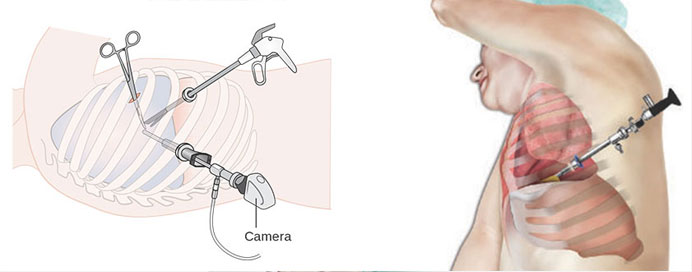
Thoracoscopy, also known as video-assisted thoracoscopic surgery (VATS), is a minimally invasive procedure used to examine and treat conditions affecting the chest cavity, lungs, and pleura. During thoracoscopy, a small incision is made in the chest wall, and a thoracoscope—a thin, flexible tube with a camera and light—is inserted to provide a visual examination of the area. This allows surgeons to diagnose conditions such as pleural effusion, lung tumors, and infections, and to perform various surgical procedures, including biopsies, drainage of fluid collections, and removal of lung nodules or portions of the lung. Thoracoscopy offers several advantages over traditional open surgery, including shorter recovery times, less pain, and reduced risk of complications. However, it may not be suitable for all patients depending on the specific condition and individual factors. Overall, thoracoscopy has revolutionized the field of chest surgery, allowing for precise diagnosis and treatment while minimizing patient discomfort and recovery time.


